Three people to trust in a spiritual conversation

As fireworks burst in the sky, the loud bangs echoed in my chest. My heart pounded, not because of the distant explosions but because the spiritual conversation I had wanted to have was finally happening.

I felt pressure — pressure to say the right thing or ask the right question. Pressure to defend myself or explain the gospel a certain way. Those holiday fireworks echoed in my mind as I tried to piece together just the right formula to get this person to believe. But then a thought popped into my head.

“What if I just listen instead? What will happen if instead of planning my next move, I just really listen and let the conversation happen naturally?”

The result was a supernatural conversation. We talked more deeply than we ever had before. I got to be vulnerable, and the person I was talking with got to ask their real questions.

I learned in that conversation that listening requires trust in three people — trust in the Holy Spirit, trust in the other person and trust in myself. I realized that when I had felt pressure, it was due to a lack of trust. Let me explain.

1. Trust the Holy Spirit

The first person I needed to trust was the Holy Spirit. Jesus told his disciples, “… the Holy Spirit will teach you at that time what needs to be said” (Luke 12:12, NLT). He didn’t want them to stick to a script. Jesus wanted the disciples to speak from the heart and trust that the Holy Spirit would help them in the moment.

For me, as I let go of the pressure I put on myself, the Holy Spirit was faithful to give me words to say from my heart.

2. Trust the other person

I have to confess that I’ve become pessimistic about spiritual conversations. I assume that other people don’t care about my faith or what I think about God. But my assumption was proven wrong that night.

I was surprised by how interested the other person was when I stopped trying to say the right thing and started speaking from my heart. I realized that I wasn’t trusting that the person cared about me and would want to hear my perspective.

3. Trust yourself

Lastly, I needed to trust myself. I thought I needed a formula or an outline to articulate what I believed. Sure, those things are helpful. But sometimes I can lean on them too much. I needed to take off the training wheels and articulate my faith for myself.

It turns out that I could do it on my own. It helped to have those tools in the back of my mind to help me. But for that particular conversation it was much more impactful to share from the heart.

I hope as you engage in spiritual conversations this month you will trust the Holy Spirit, the other person and yourself. Trust that God is guiding you and that the other person really does want to hear your perspective.

The pressure’s off!
What I learned from a conversation with my friend

Tool options

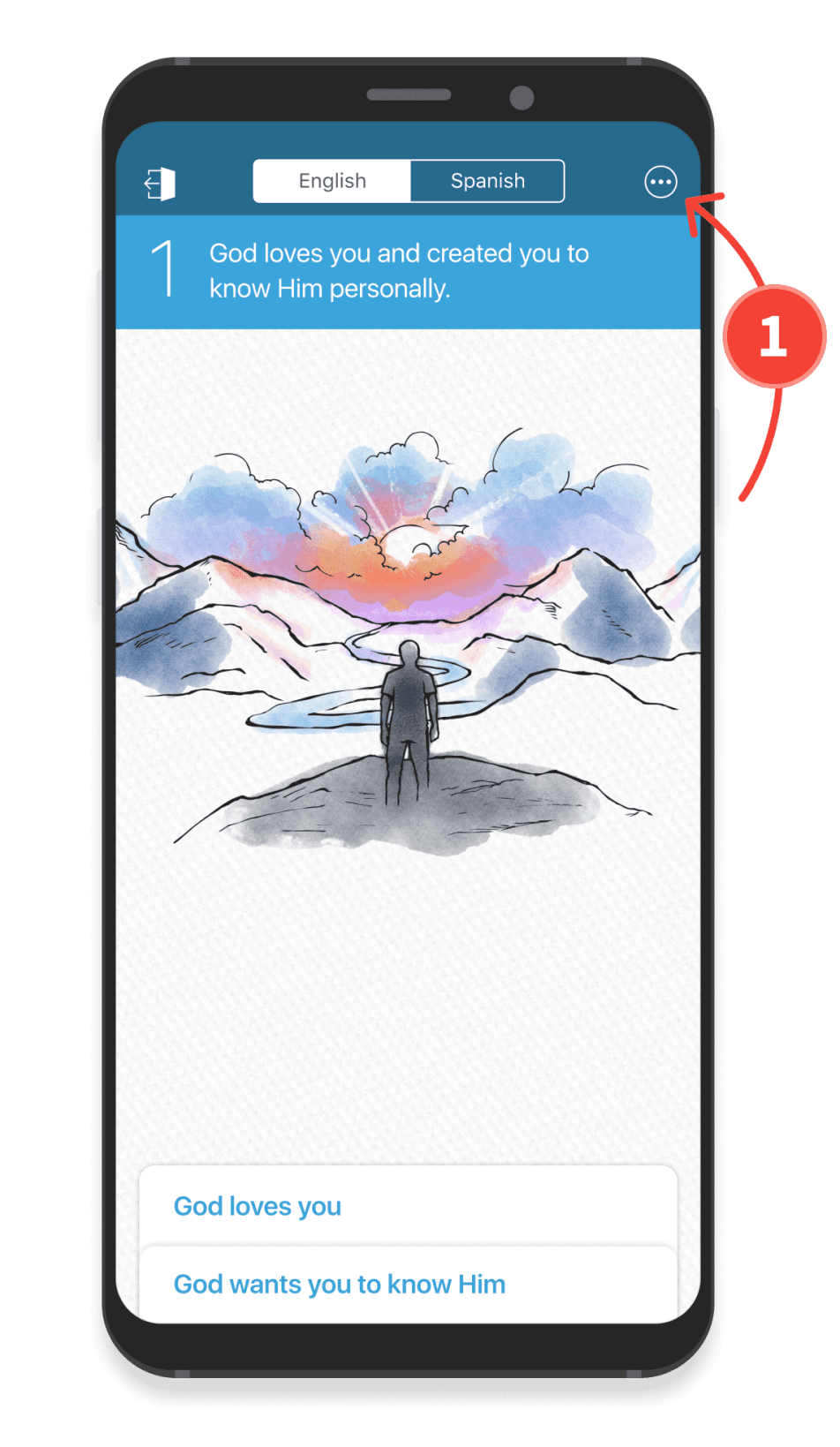
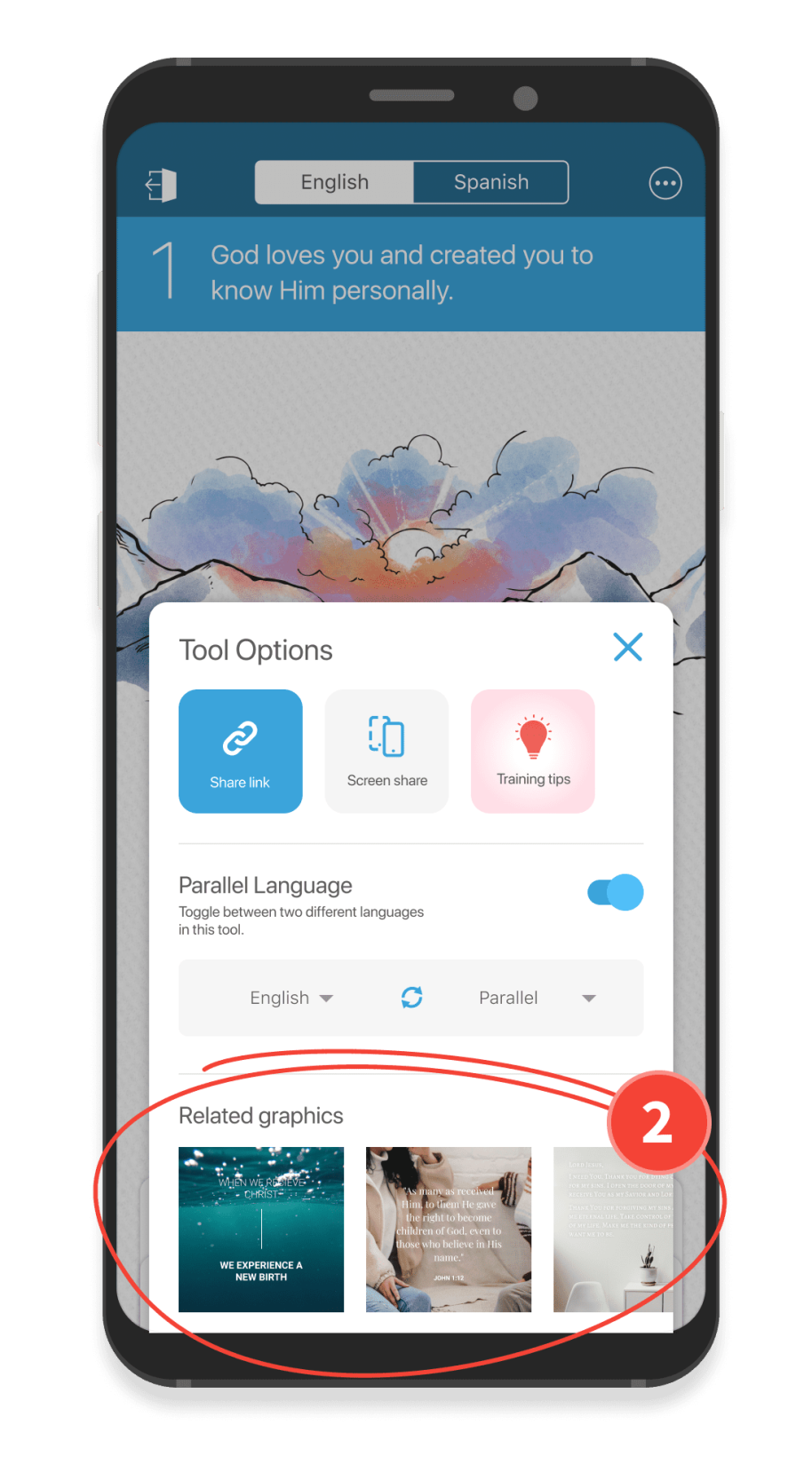
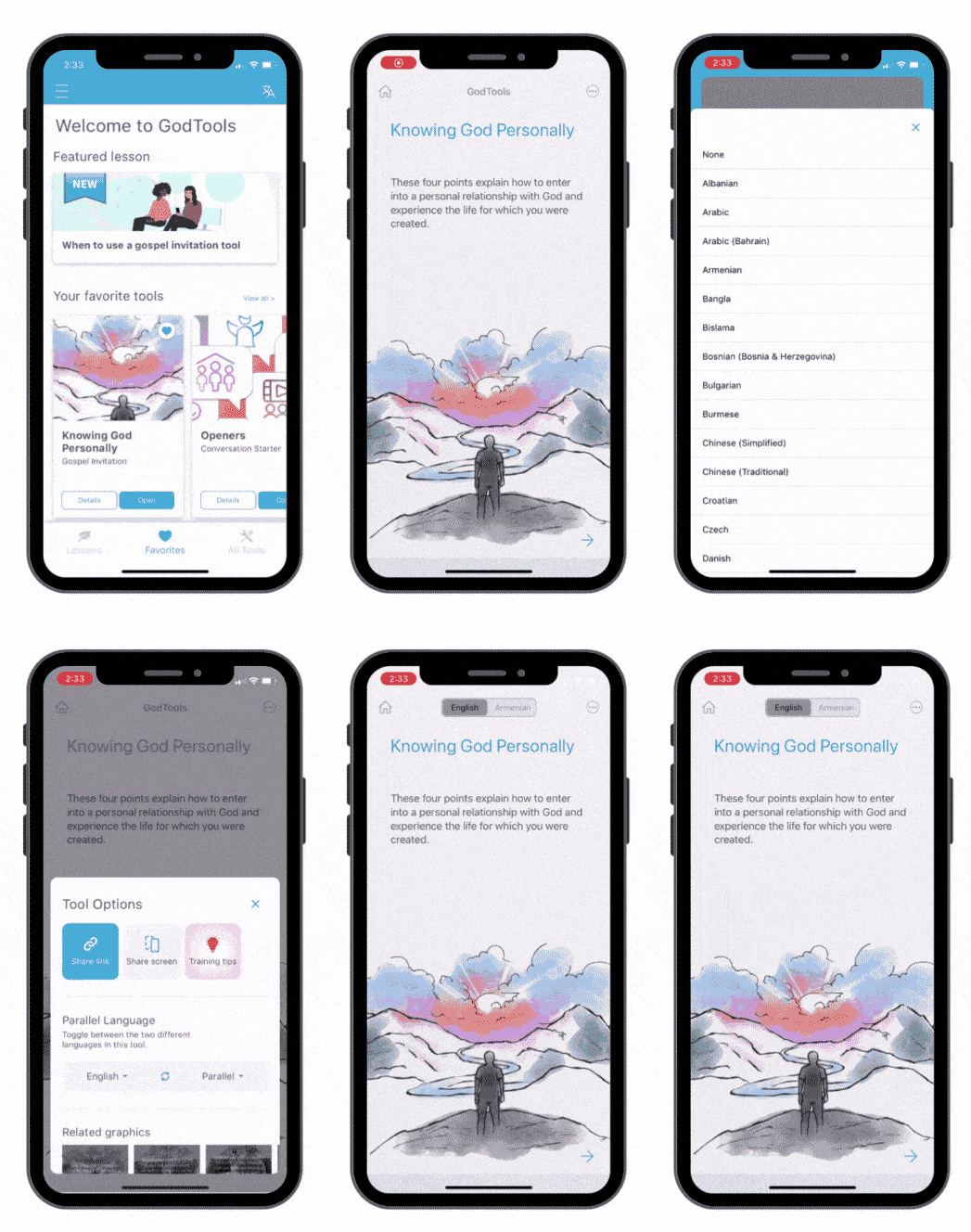
The Tool Options menu replaces the older share icon in order to give more options for how to use your favorite tools. From the options menu you can share a link, share your screen, turn on or off tips, change your tool language, and access related graphics.

gt-summer-2

Related Images

In a digital world, it’s not always possible to have a live conversation with someone. With new related graphics, you can start or even continue a conversation by sharing a thought-provoking quote or diagram from your favorite tool. To access related graphics, open a tool and tap on the Tool Options menu. Related graphics are located at the bottom of the Tool Options drawer. Images were initially released in select tools and languages.

related-1
Frame 771

Tool versions

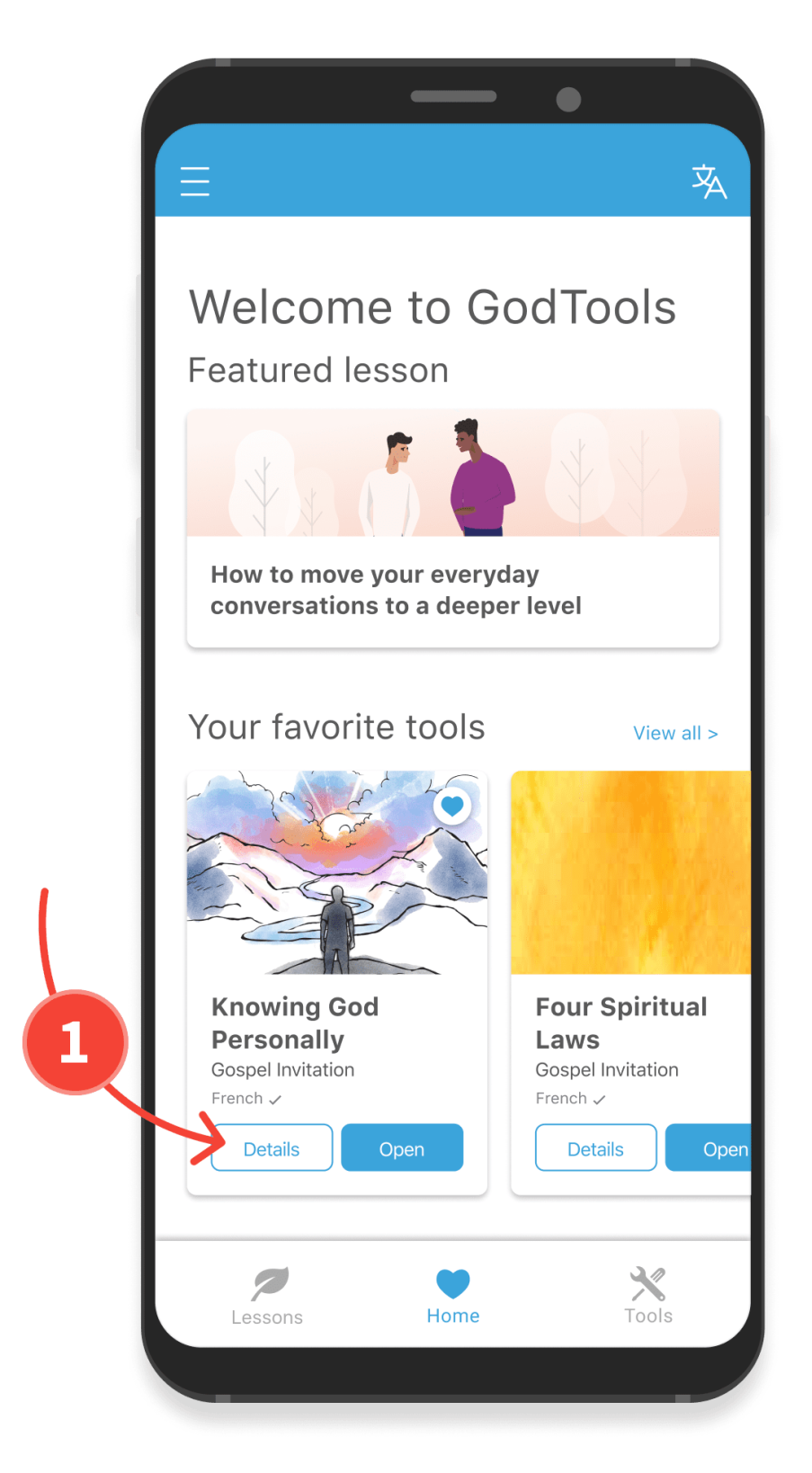
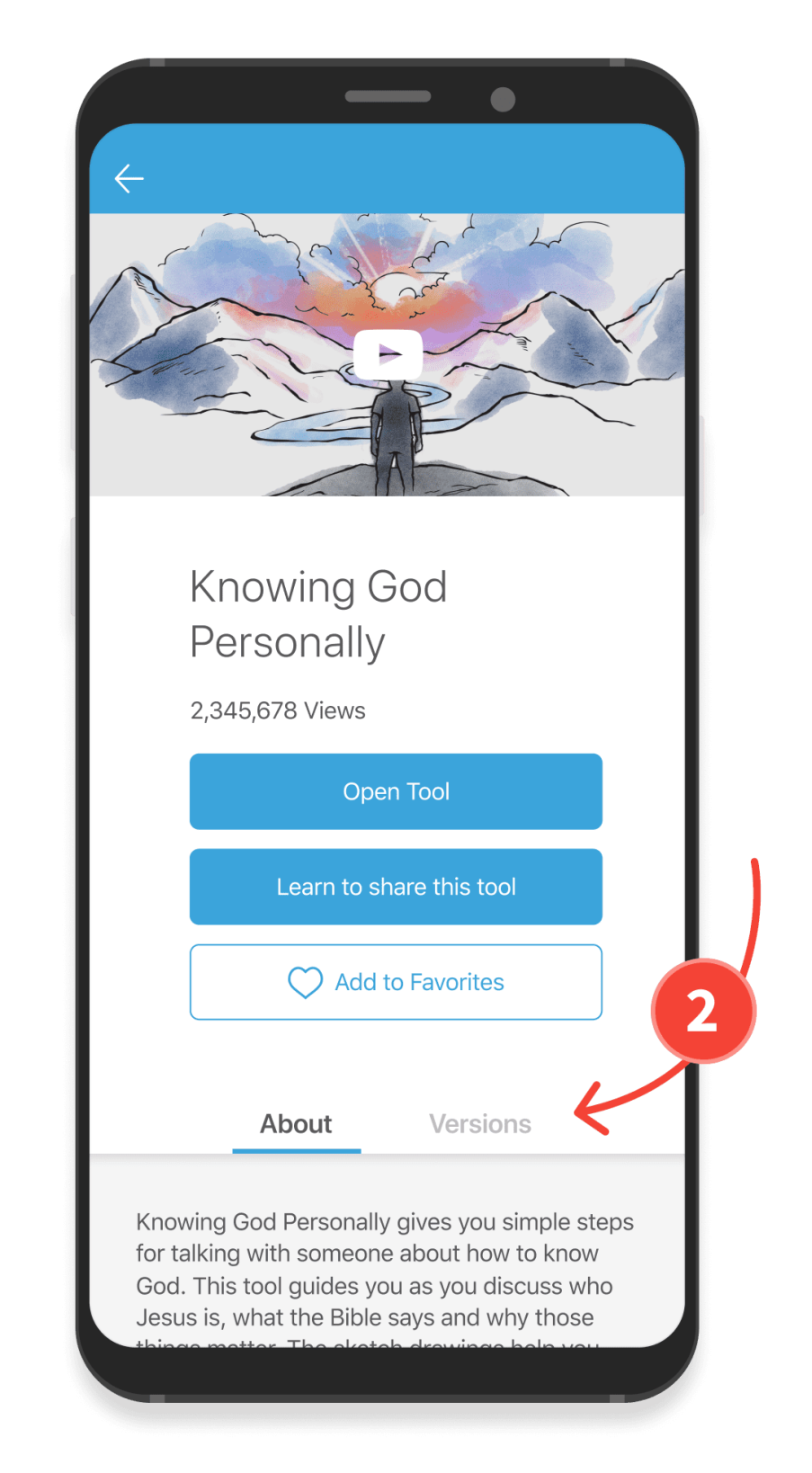
Tool Versions allow for adaptations of our classic tools to reach new audiences. Tools like: Four Spiritual Laws, Knowing God Personally, THE FOUR, and Satisfied? have all been adapted since their inception to use wording or images that connect better with certain groups of people. We’ve now added some of these adaptations to make tools even more effective. Find the version of your favorite tool that communicates best to the person you want to talk with. You can access tool versions from the details page of a tool. Not all tools have versions and versions are not available in every language.

versions-1
versions-2

GodTools version 6.0

With this major release we redesigned the Favorites screen, offering you quicker access to more of what GodTools has to offer. Review the “Featured lesson” to get motivation and inspiration for your next conversation. Then access your favorite tools just like before. The new layout also makes space for more features to be added to the Favorites screen in the future.

And GodTools 6.0 comes with a redesigned Tools screen to help you discover new tools. See the “Tool spotlight” for our top tools used around the world. You can also view tools by category to find the right tool for the conversation you want to have.

Being a great listener is one way to extend God’s love to those around you

When was the last time you felt truly listened to? It does not take much, but listening is so important in creating a meaningful space for genuine conversation.

Several years ago I began to notice how poorly I listen to others. So I set out to improve my skills by reading about the topic and practicing what I learned. Over time I realized that my greatest need was not knowledge or an improvement in skills, although these are important.

My greatest need was a change in heart. I needed the Lord to help me love others, and to give me a desire to communicate my love through listening.

Thankfully the Spirit has helped me experience some growth in this area. I find that as he works in my heart, I am able to focus more on the people I’m listening to. I am less concerned about making progress, or even projecting an image of someone who listens well.

At GodTools, we talk often about the importance of listening well to others, to ourselves and to God. It takes work to clear space in our hearts and minds to listen.

We believe there are three keys to good listening: focus, curiosity and insight.

1. Focus

Being a good listener requires focus. We are surrounded by distracting thoughts and messages multiple times a day. To be a good listener, practice focusing your mind and body to clear out any distractions. By giving others your full attention you communicate that they matter, they are loved and they are worth listening to. It makes a difference in any conversation.

2. Curiosity

Curiosity is the art of uncovering a person’s story through asking questions. This can sometimes feel daunting so let’s reframe it in a new way. Curiosity expresses love by centering the other person instead of ourselves. We believe there are two dimensions of curiosity: being curious about the person, and being curious about God’s work in that person.

 
3. Insight

As you listen with focus and curiosity, trust the Holy Spirit to give you insight. The Spirit may give you some wisdom to offer in conversation or your insight may be recognizing the right question to ask or an observation to share. Sharing an insight is an expression of love. It is a way of meeting people where they are and helping them take a next step.

I also find that God is awakening in me a curiosity to know more about people. Love compels me to gently inquire about others’ feelings, thoughts and stories as I focus on them. God made people in his image. As I focus my attention on people, with genuine curiosity, I begin to see more clearly God’s image uniquely expressed in them.

Being a great listener is one way to extend God’s love to your family, friends, neighbors and co-workers. Who will you listen to this week?

Easter is over. You think you missed your window to talk about Jesus? Think again.

Easter is a great opportunity to bring a friend to church or have a spiritual conversation. But sometimes the unexpected happens or a friend just is not interested. You might feel like you missed your chance. But think again.

There are always opportunities when you have a good question to ask and are ready to listen.

One way to strike up a conversation after Easter is to ask a question like this: “I always love the Easter season. Is there a holiday or season that has special meaning to you?”

This type of question flips the script on the usual Easter approach. Instead of asking your friend to come experience what’s meaningful to you, you’re asking what’s meaningful to your friend. This approach communicates that you care about what’s important to your friend, not just getting them to care about what you think is important.

Here are a few things to remember as you start this conversation with your friend.


1. Listening is always key

Try not to come into the conversation with ulterior motives. This is not a clever way to get them to ask you about Easter. Genuinely listen and learn what holidays or seasons are meaningful to your friend and why.


2. Find common ground

Chances are there are similarities between what matters to you and what matters to your friend. Find those areas of overlap and focus on what you have in common.


3. Celebrate together

If your friend has a holiday that is important to him or her, consider celebrating it together. Maybe that means attending a religious service with your friend, or eating a special meal together. Seek to learn and understand, and your friendship will grow deeper because of it.

One summer I attended a mosque with some Muslims I was becoming friends with. I was nervous at first, not knowing what it would be like.

But when I arrived I immediately noticed their reverence toward God. I admired their understanding of God’s holiness, which mirrored my own understanding. That was common ground that we could all appreciate. As a result we were able to have many spiritual conversations after that experience.

You may find that having a conversation about important seasons or holidays immediately opens the door to talking about Jesus. But do not be surprised if it takes longer. Trust takes time to build, so be patient. Be ready to talk with your friend about God when the moment is right.

The way it ended was so different than how it started

Hi, my name is Ben.

A few weeks ago I was working on a house project. So I went to a home improvement store to get what I needed. But before going in I just sat in my car to have a few moments alone. Well that did not last long because the man who parked next to my car opened his door and hit my door.

Naturally I was a little surprised, and upset. But to even more surprise — he was kind of frustrated that I was even concerned. He kind of shook his head, mumbled something under his breath, and tried to just get in his car and leave.

I remembered going through a GodTools lesson on hostile conversations. And I asked him this question, “Did I do something to offend you?” And he said “yes” and that people make too big of a deal about small things.

Even though he was the one who hit my car, I swallowed my pride and said, “I’m so sorry for offending you. I actually agree with you. But what do you mean by that?”

He ended up sharing that he had a friend who passed away the night before. So immediately I recognized why he was responding the way he was responding. He was angry, and sad.

So I just asked him a few more questions and listened. I was even able to ask a few questions about his own spirituality, his faith background. Because usually these events bring up questions about one’s purpose in relationship with God.

By the end of the conversation, the man I was talking to at the beginning was totally different than at the end. It was a pleasant conversation. He ended up even apologizing for his response and thanked me for listening.

What I learned is that just with a few questions and an apology you can diffuse a hostile conversation. You never know what battles a person is going through in the moment.

And so, that is my conversation story.

GodTools team members tell us what’s on their minds

DOCO headshot 2022

Lucas Mathews 

What’s your role within the GodTools team?

I am the product manager for the GodTools app. I help move the GodTools app forward with new features, tools and lessons.

What’s the problem or challenge you’re wrestling with or thinking about right now?

I’ve been thinking about how to make conversations about Jesus fun and interesting for people who normally would not think of talking about faith as enjoyable.

What prompted you to think about this?

There are a few people in my life I really care about but who just are not interested in faith. Faith does not seem relevant to their lives. However, I have had really interesting conversations with them about spiritual things when it intersects with something they do care about. That got me thinking about how GodTools could help people talk about faith in ways that are interesting and fun.

Why does this problem matter to you?

I think non-Christians have really great questions about faith and spirituality. But Christians are really weird sometimes. I think it would help a lot of Christians if we were more able to engage with people in natural, fun and interesting ways.

What have you learned recently that’s helping you think about this?

As a team, we’ve been talking with non-Christians and hearing what they think about Christianity. Sometimes the feedback is not what we hoped for. But it’s helping us create a product that really can make conversations about Jesus enjoyable for everyone.

What question could our readers answer that might help you with this?

Which conversation about faith that you’ve had with a non-Christian friend has been the most fun, and what made it so enjoyable?

80377157_180150193171734_2573376784074539008_n (1)

Justin Sooter

What’s your role within the GodTools team?

I lead the GodTools team and also contribute as a designer on our app and website.

What’s the problem or challenge you’re thinking about right now?

How can we help make evangelism feel more accessible for ALL Christians?

What prompted you to think about this?

You do not have to look very hard for statistics about the dwindling numbers of Christians who personally practice evangelism — especially in Europe and North America.

Personally, I know so many Christians who want to be able to share the good news of Jesus with their neighbors, friends and family. But they are unsure where to start or they’ve had a negative experience of this in the past.

Why does thinking about this problem matter to you?

People still need the gospel. I’m not expecting to find a perfect solution that works for everyone. But I know that one good question, one simple act of kindness, or one single meaningful word is often enough to open the door for deeper and more honest conversation.

What have you learned recently that’s helping you think about this?

I recently read “Effective Intercultural Evangelism” by Jay Moon and Bud Simon. It’s helped me think through how I share my faith through my words, actions and even my attitudes.

I believe people, perhaps more than ever, are looking for transcendence, clarity and stability. People are hungry for the gospel, but we (me included) do not always know where to start.

What question could our readers answer that might help you with this?

I’d love to know, how have you built up the courage, confidence or skill to try sharing your faith?

ann-1

Ann Cochrum

What’s your role within the GodTools team?

I work with translators to make the app content available in more languages and appropriate for different cultures.

What’s the problem or challenge you’re wrestling with right now?

How do we make using the app a better experience for people who do not have all the content translated into their language?

What prompted you to think about this?

I think it comes from years of considering what people using our app really need.

Why does thinking about this problem matter to you?

The good news of Jesus Christ is for everyone. And we want to help Christians be ready to have conversations about him all around the globe.

What have you learned recently that’s helping you think about this?

I am currently working with language champions from Latvia and Vietnam, and I am so encouraged by their initiative to make the app relevant to their audiences.

What question could our readers answer that might help you with this?

If you are a non-English speaker, how do you think we could improve your experience with the GodTools app?

jamin1

Jamin Latvala

What’s your role within the GodTools team?

I help our content creators communicate in a clear and effective way.

What’s the problem or challenge you’re thinking about right now?

How can we help Christians overcome the fear of hostility when talking about Jesus?

What prompted you to think about this?

I read an article by Alistair Begg called “Welcome to Exile. It’s Going to Be OK.”

Begg says, “Christians are increasingly going to be seen as different, and not in a good way. We are increasingly going to have to choose between obedience and comfort. The next decades will not bring apathy to the gospel, but antagonism.”

Why does thinking about this problem matter to you?

Helping Christians overcome the fear that threatens to silence us is so important because the gospel is so vital. God will work through us as we courageously and lovingly talk about Him with the people in our life.

What have you learned recently that’s helping you think about this?

Elliot Clark’s “Evangelism as Exiles” helped me see that an effective antidote to fear is knowing you’re not alone. Since the first century, many Christians have lived out their faith in cultures that were hostile to the gospel, and many still do.

What question could our readers answer that might help you with this?

What gives you the courage to lovingly share the gospel when the person you’re talking with is opposed to Christianity?

lvLV