

3 consejos para iniciar conversaciones espirituales con la gente estas fiestas
The Christmas season is a special time of year when spiritual conversations with people in your life can happen naturally. Holiday gatherings create opportunities to talk with friends and family you do not see every day, like that cousin who lives out of town. And even close friends and relatives are likely to be more open to meaningful conversation during the holiday season.
But feelings of pressure, and dread of small talk, are not uncommon at this time of year. Having the conversation you’ve been praying for may take focus and some strategic thinking. So here are three tips to remember when starting spiritual conversations during the holidays.
1. Timing is not “everything,” but it’s very important
Have you been looking for a chance to talk with your family member or friend about faith? If so, a holiday meal or party might be a great time to chat. A sense of comfort can fill the room when people are gathered for a traditional meal. People mingle and laugh in a welcoming place.
At the same time, it’s important to think about whether you’re trying to start a conversation with the person at the right moment. For example, someone who is hosting or helping with the meal could feel busy. And if something doesn’t go right — what is that smoke coming from the kitchen?! — they might feel stress too.
So notice if they’re distracted or hurried. The way to show your care in that moment is likely through practical help. But keep your eyes open for a time when the person is able to relax and talk without needing to pay attention to something else.
Another thing to consider is where the friend or family member is on their faith journey. For example, if the person has shown open hostility toward spiritual topics, it might not be the right time to start that conversation with everyone around.
In that case, you could simply share your own story — about how God has worked in your life. Part of your story might relate to what the person is going through in their life and could help them move closer to God. “The power of your God story” lesson could help you think about how you would communicate your story.
2. Go deeper by asking good questions and listening well
If talking about something other than the weather feels challenging, that’s OK. One idea is to think about what God is currently teaching you or about a book you’re reading. It’s often easy to talk with others about what you personally find interesting. This can create a natural connection to something the other person finds interesting or has also been thinking about.
But perhaps a better approach is to pray and think beforehand about thoughtful questions you’d like to ask the person. Then look for chances to show care and get to know the person more by asking those questions.
Get some inspiration for good questions from the Openers tool.
Good questions will likely lead the two of you from a surface-level conversation to a deeper one. When that happens, continue to depend on the Holy Spirit to guide you with the appropriate questions to ask.
And having asked a question, seek to get to know the person more by truly listening to them. They might not want to talk about deeper topics, and while that’s disappointing it’s also OK. When you focus on listening well, you can let go of your expectations for the conversation.
Maintain a mindset of loving the person you’re talking to and wanting to bless them, rather than needing the conversation to go a certain way. The “How to love people by listening” lesson will give you more tips on how to be a good listener.
3. Think and pray about your next step with the person
After you talk with someone, take some time to think and pray. Writing down a prayer request can help you remember to pray and may bring to mind topics to ask them about later.
Here are two valuable questions to think through: How can you continue the conversation? And what other next step can you take with this person?
Point your friend or family member to a resource that helps answer their spiritual questions. That way they can continue discovering and learning on their own. Consider inviting them to a Bible study or church event. Allow God to lead you in taking the best next step for that person, and trust that He will work in their life through you.
Cómo las gafas del Evangelio te ayudan a ver tus relaciones bajo una nueva luz
Growing up I never learned how to open my eyes underwater. So when I played water games with my friends, like diving for toys, I would squeeze my eyes shut and flail my arms blindly on the pool floor. Most of the time I ran out of air, gave up and returned to the surface in defeat.
And then my parents got me a pair of electric-blue goggles. What was once dark, vast and nebulous instantly became approachable and fun. Putting on those goggles opened my eyes to see underwater in a new way.
Having spiritual conversations with someone can feel like diving without goggles. You feel the pressure in your chest, you’re fumbling around without really knowing where you’re going. But when you put on gospel goggles, the murky water of spiritual conversations suddenly becomes clear.
Putting on gospel goggles refers to the practice of training ourselves to see the world through the lens of the gospel. God’s good news changes everything, and it especially changes how we see the people in our lives.
How has the gospel changed the way you see people? For me, it’s changed my view of people in four important ways.
1. From “inconvenient” to “loved by God”
I’m not really a people person. When I’m not at my best, I see people as “in my way” — an annoyance. I like space to myself, and other people feel like intrusions in that space.
The gospel, however, reminds me that God loves the people in my life dearly. He became a human being to empathize with us, suffer with us, spend time with us. He sacrificed his time and space to be in a relationship with us. When I look through this lens, I see people as God’s treasure, uniquely made by him and loved by him.
2. From “out to get me” to “broken by sin”
I used to think of people as purposely doing bad things because they are just bad people who want to hurt others. But it’s not that simple.
The gospel points out that sin and Satan are real actors in human history, twisting people into hurting one another and themselves. The gospel reminds me that all is not as it should be. We all sin against other people, and we are all sinned against by others.
3. From “hopeless” to “hope in Jesus’ power to restore”
It’s easy to see humankind’s brokenness, and when someone I love seems broken beyond repair it’s easy to see them as hopeless. But the gospel says that Jesus can make anyone new. There is not a single person in the world who is beyond Jesus’ power to love and restore. He came to release us from sin’s power over us and to make us into who God made us to be.
4. From “nothing I do will make a difference” to “I can help”
When I see people in my life, it’s easy to think that nothing I do will make a difference. But the gospel says that God is making all things new and that he brings change by using people like you and me. God can make a person new no matter how broken they seem. And he can use you and me to display his love and grace in people’s lives.
Seeing people through gospel goggles takes practice. I recommend taking a few minutes each day to think about someone in your life through a gospel lens. To make getting started fun and easy we created two printable gospel goggles worksheets. One is a fill-in-the-blank worksheet and the other is a set of reflection questions. Pick the one that sounds most helpful to you, or use both. We hope you enjoy them!
Cómo mostrar el Evangelio en la vida cotidiana
Forgiveness. Love. Sacrifice. In conversation your words display the good news of Jesus. But there’s more. The way you live communicates to someone too. People see that faith makes a difference in your daily life by how you treat people and by other choices you make. Both talk and action display the gospel.
So what does this actually look like? Here are some ways you can demonstrate the gospel in your daily life:
- Be generous with who you are.
- Be quick to ask for forgiveness.
- Give up your time, money and/or reputation for others.
- Be open to sharing about your spiritual journey.
Being generous with who you are
Before you do anything, remember that you reflect God’s character. God made humans in his image (Genesis 1:27) and we see different aspects of who he is through the goodness in people.
Your personality and interests can also show friends and family the love of God. The difference between knowing your results on a personality test and helping someone understand the gospel happens when you choose to give generously from the person you are.
“Therefore be imitators of God, as beloved children. And walk in love, as Christ loved us and gave himself up for us, a fragrant offering and sacrifice to God” (Ephesians 5:1-2, English Standard Version).
Working as a journalist means that I follow people around who have different passions and gifts than I do. While spending time with them I see glimpses of how they imitate God and “walk in love.” An artist writes poems on a typewriter and gives them away to people in her city. A gardener brings his crop to share with his neighbors. A college student helps peers learn from Scripture.
When you use the hobbies that you have in ways that serve people, you demonstrate the generosity of Jesus, who made the ultimate sacrifice — his life. Generosity doesn’t have to mean only giving someone material things.
One way to be generous is to intentionally show care to people in ways that are natural for you. If you’re a curious person, asking about how someone grew up demonstrates a real desire to know them. Maybe you are an empathetic introvert. If so, just being present with someone and seeking to understand what they’re going through can mean more than saying a lot of words. If you’re a resourceful problem-solver, you could help a friend with their finance budget or help them talk through a decision they need to make.
The ways you represent God will not always look the same as the ways other people represent him. And that’s a good thing. You can be honest in showing friends and family the kindness of God through your unique personality and in the midst of your imperfections.
Acknowledge the goodness in someone else
Another way to demonstrate the gospel is to encourage the other person by acknowledging the goodness you see in them. When you notice a characteristic of God in someone else, point out to that person what you appreciate. It could be through a quick text message. Or you could encourage a co-worker, who asked about something in your life, by telling them you value their thoughtfulness.
You don’t have to strive to perfectly show people what God is like. You can take steps to get to know people and demonstrate the gospel in everyday moments. With intentionality ask yourself, “How can I use time, words or other resources to make someone feel valued today?” Then take opportunities that come to both show and talk about the gospel.
¿Quieres entablar relaciones con tus vecinos? Prueba una de estas excusas
When we think about excuses, we typically see them as a cop-out. We use them to rationalize our mistakes because we’re doing the wrong thing, rather than the right thing.
Our excuses are attempts to give ourselves a pass. We make excuses when it comes to lack of discipline with exercise (too busy), poor spending habits (not good at math), being underprepared (dog ate my homework), relationships (their fault) and lots more. The adult inside us says, “Stop making excuses and start taking responsibility.”
But excuses are not always bad. Once in a while they give us permission to move toward something good. Sometimes an excuse is exactly what we need.
When we first moved into our neighborhood, there was some awkwardness when it came to introducing ourselves. We felt like we needed a “why.”
We needed an excuse
For us, that excuse was food. Bingo and Angie lived behind us and, as it turned out, Bingo mentioned he had a couple fryers and liked to fry things — turkeys, cornish hens, etc. Before we knew it, we were co-hosting a fish fry and meeting neighbors we’d never met before.
After that, we met a couple who wanted to do a neighborhood block party. Through the simple power of invitation we saw neighbors from different ages, races and worldviews coming out of the woodwork to gather in our front yard.
Pushing through awkward interactions and (re)introductions with neighbors has not been easy, but it’s been worth it. As you seek to build relationships with your neighbors, try making one of these excuses.
Make an excuse to pray
Start with neighborhood prayer walks. Whether you live in a city, the suburbs or out in the countryside, remember that God has placed you there for a purpose. Start a neighborhood prayer journal. If you learn someone’s name, pray for that person by name. Ask yourself, “If God were to answer all my prayers for my neighborhood, what would change?”
Make an excuse to break the ice
Start with the neighboring basics, like a wave or a smile. Put your phone away and make eye contact, then say hello or introduce yourself. And consider asking for help. Borrowing a kitchen utensil or the proverbial cup of sugar, asking for a recommendation or expertise about something, or getting help with something in the yard are all great excuses to break the ice. Return the favor by dropping off a baked good or note to say thank you. Ask yourself, “Are there needs I have that my neighbors could help meet?”
Make an excuse to serve
Look for ways to serve the vulnerable in your apartment building or neighborhood, for example the marginalized, elderly, or someone with special needs. Pick up trash as you walk, share fresh produce with your neighbors, plant trees, stuff welcome baskets, organize a neighborhood clean-up day, or use the holidays as an excuse to drop off treats. Ask yourself, “If I were to move away, would I leave my neighborhood better than I found it?”
Make an excuse to go deeper
There is no one-size-fits-all when it comes to neighboring, and you want it to be something you can sustain over time. Maybe it’s walking with a neighbor or starting a book discussion. Maybe it’s inviting a few neighbors to a pancake breakfast or a spaghetti night. Ask yourself, “What’s something that fits my temperament, interests, season of life and neighboring context?”
Whatever it is, find the excuse you need to see your next-door strangers become your next-door friends.

MORE ABOUT CHRIS AND ELIZABETH McKINNEY
Chris and Elizabeth McKinney are passionate about helping people love their next-door neighbors. They work for Cru City and serve as associate staff at their church in Missouri, The Crossing.
¿Sabes lo de ser vecino?
I’ll never forget when my husband and I told our church secretary we were making a change in our ministry focus. “We’re no longer going to be reaching college students. We’ll be doing neighboring,” I said with excitement. She looked back at me with a blank stare. “Neighboring?”
Prior to 2012, the word “neighboring” described something or someone located either near or next to, like a neighboring country. When Dave Runyon and Jay Pathak titled their book, “The Art of Neighboring,” they coined the term in a new way. Neighboring is now also a verb that means to deliberately and actively engage with your neighbors.
This idea of neighboring came as a striking contrast to the cultural norm, which had become much more passive. The days of knowing our neighbors — even depending on them — seemed a thing of the past. Now, neighborliness was defined by keeping the peace, taking the trash out and generally leaving your neighbor alone.
But thinking about neighboring in a biblical way means more than just living near someone or keeping the peace. Jesus didn’t leave us alone. Instead he moved into our neighborhood and became a neighbor to each of us.
Why does neighboring matter?
Given the cultural pull toward isolation, for many of us the idea of moving toward our neighbors may feel uncomfortable, awkward or maybe even wrong. But as believers, we may also feel guilty. “I know I should reach out, but I don’t have the energy or the time. And even if I did — it’s just too weird.”
We feel the disconnect between wanting our neighbors to know Jesus but not knowing their names. We want to engage with the Great Commandment and the Great Commission but we’re so isolated that we don’t have the relational connection to support meaningful conversations. We shrug off Jesus’ expectations as unrealistic: How can I show and share the love of Jesus with someone I’ve never met?
But what if we could change all that through simple acts of neighboring? And what if we were slower to divide our neighborly conversations and interactions into sacred and secular categories? Instead, what if we begin to trust that God uses ordinary means to establish relationships where we can share the gospel?
Perhaps it would break our sacred and secular categories and take the pressure off. Maybe we’d see gospel fruit by drawing neighbors out of isolation and into unexpected friendships. Rather than being guilt-motivated, we could become gospel-motivated. Rather than leaving our neighbors alone, we could make the first move.
Jesus made the first move, and so can we.
MORE ABOUT CHRIS AND ELIZABETH McKINNEY
Chris and Elizabeth McKinney are passionate about helping people love their next-door neighbors. They work for Cru City and serve as associate staff at their church in Missouri, The Crossing.
3 cosas que tu amigo no cristiano quiere que sepas sobre las conversaciones espirituales
At GodTools we want to help both Christians and non-Christians enjoy having conversations about God. So in order to understand what makes spiritual conversations enjoyable to non-Christians, we’ve asked them directly.
In our recent research we’ve talked with dozens of non-Christians about what they want out of spiritual conversations with Christians. The results have been insightful. Here are a few things we’ve learned from them:
1. Who you are as a friend is more important to them than your faith
“I see [Christians in my life] as people and judge them based on their personality. I don’t actually care whether they are Christians or not.”
One theme that has come up again and again is that most non-Christians want you to be their friend first and foremost. What does being a friend practically look like in a conversation? They want you to respect them, and they want to have genuine conversations.
Non-Christians don’t want you to come into the conversation with an agenda or try to force the conversation a certain way. Who would? For help on being a genuine friend to the non-Christians in your life, check out our lesson, “How to love people by listening.”
2. Show them how faith has made a difference to you
“Tell me about you. Why did [Christianity] help you? What in particular do you get out of it? That would be fascinating.”
Non-Christians we’ve talked with have often expressed the desire to hear why faith is important to their Christian friend. They may have already heard a hundred times what Christians believe. They want to know why they believe it and how it impacts their everyday lives. If you need help thinking about how God has impacted your life recently, check out our lesson, “The power of your God story.”
3. Connect your faith to real life and the real world
“[Referring to stories from the Bible] How do these stories tie in with life today? With people’s interests today? With what’s important to them today? Otherwise it feels like bedtime stories.”
Talking with non-Christians about the Bible is often a non-starter. For many non-Christians, the Bible doesn’t hold any unique weight as a source of truth or wisdom. It seems like old fairy tales that aren’t even that interesting.
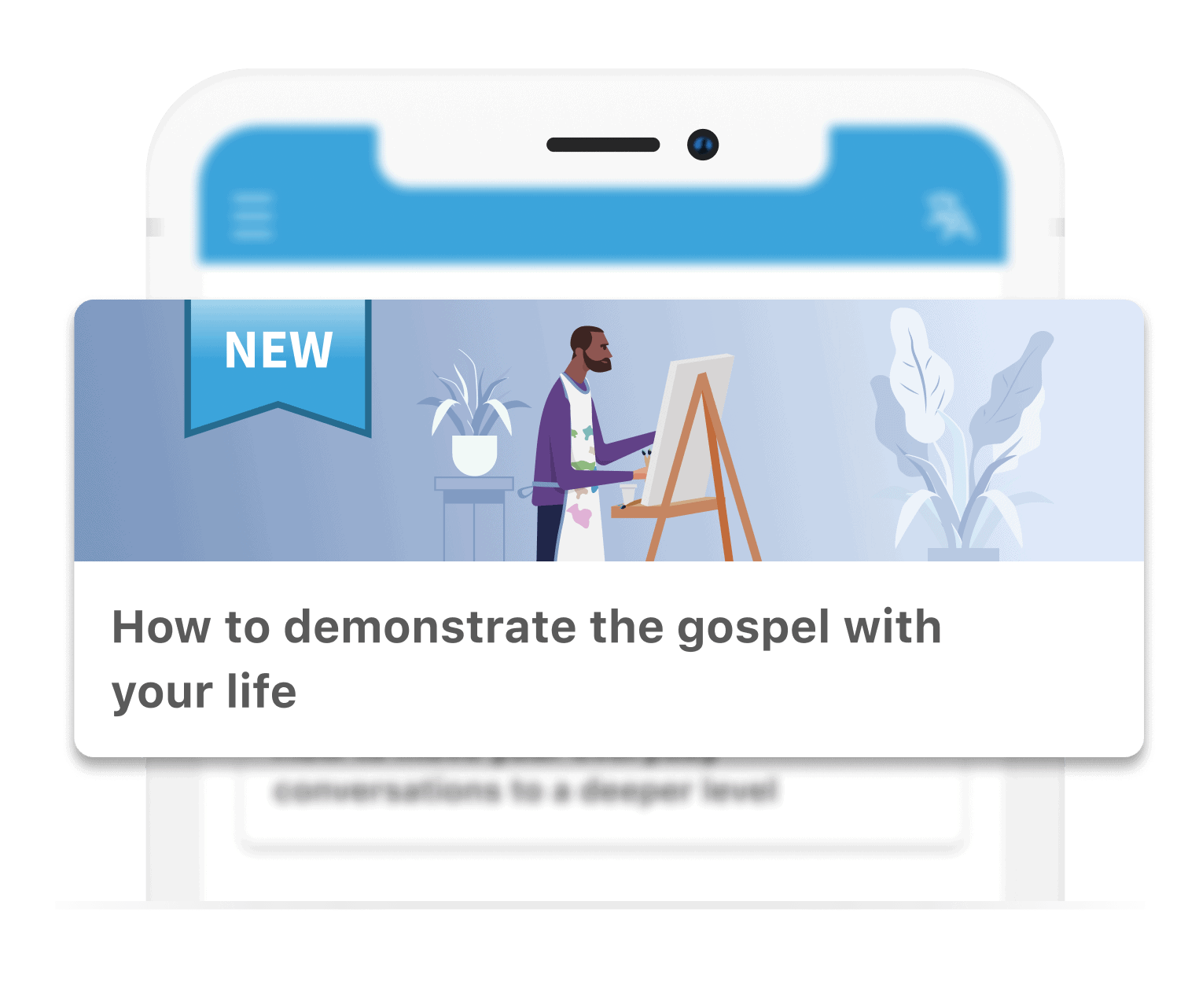
What is compelling, however, is when people can see how your faith impacts the real world. How is faith making you a better person, a better friend, a better influence on society? They want to see the benefit your faith has for you and the people around you. By seeing how you embody the truth and wisdom of Scripture, they will come to respect it. Our newest lesson, “How to demonstrate the gospel with your life,” talks about how to do this practically.
The non-Christians we’ve talked with love their Christian friends. It’s true that sometimes they’re a little weirded out by how those friends talk about God and spirituality. But many non-Christians long to have fun and meaningful spiritual conversations with Christians.
We’re grateful to these non-Christians for their honesty with us. And we hope hearing from them helps you see the potential for great conversations with the non-Christians in your own life.
Tres personas en las que confiar en una conversación espiritual
As fireworks burst in the sky, the loud bangs echoed in my chest. My heart pounded, not because of the distant explosions but because the spiritual conversation I had wanted to have was finally happening.
I felt pressure — pressure to say the right thing or ask the right question. Pressure to defend myself or explain the gospel a certain way. Those holiday fireworks echoed in my mind as I tried to piece together just the right formula to get this person to believe. But then a thought popped into my head.
“What if I just listen instead? What will happen if instead of planning my next move, I just really listen and let the conversation happen naturally?”
The result was a supernatural conversation. We talked more deeply than we ever had before. I got to be vulnerable, and the person I was talking with got to ask their real questions.
I learned in that conversation that listening requires trust in three people — trust in the Holy Spirit, trust in the other person and trust in myself. I realized that when I had felt pressure, it was due to a lack of trust. Let me explain.
1. Trust the Holy Spirit
The first person I needed to trust was the Holy Spirit. Jesus told his disciples, “… the Holy Spirit will teach you at that time what needs to be said” (Luke 12:12, NLT). He didn’t want them to stick to a script. Jesus wanted the disciples to speak from the heart and trust that the Holy Spirit would help them in the moment.
For me, as I let go of the pressure I put on myself, the Holy Spirit was faithful to give me words to say from my heart.
2. Trust the other person
I have to confess that I’ve become pessimistic about spiritual conversations. I assume that other people don’t care about my faith or what I think about God. But my assumption was proven wrong that night.
I was surprised by how interested the other person was when I stopped trying to say the right thing and started speaking from my heart. I realized that I wasn’t trusting that the person cared about me and would want to hear my perspective.
3. Trust yourself
Lastly, I needed to trust myself. I thought I needed a formula or an outline to articulate what I believed. Sure, those things are helpful. But sometimes I can lean on them too much. I needed to take off the training wheels and articulate my faith for myself.
It turns out that I could do it on my own. It helped to have those tools in the back of my mind to help me. But for that particular conversation it was much more impactful to share from the heart.
I hope as you engage in spiritual conversations this month you will trust the Holy Spirit, the other person and yourself. Trust that God is guiding you and that the other person really does want to hear your perspective.
The pressure’s off!
Saber escuchar es una manera de extender el amor de Dios a los que te rodean.
When was the last time you felt truly listened to? It does not take much, but listening is so important in creating a meaningful space for genuine conversation.
Several years ago I began to notice how poorly I listen to others. So I set out to improve my skills by reading about the topic and practicing what I learned. Over time I realized that my greatest need was not knowledge or an improvement in skills, although these are important.
My greatest need was a change in heart. I needed the Lord to help me love others, and to give me a desire to communicate my love through listening.
Thankfully the Spirit has helped me experience some growth in this area. I find that as he works in my heart, I am able to focus more on the people I’m listening to. I am less concerned about making progress, or even projecting an image of someone who listens well.
At GodTools, we talk often about the importance of listening well to others, to ourselves and to God. It takes work to clear space in our hearts and minds to listen.
We believe there are three keys to good listening: focus, curiosity and insight.
1. Focus
Being a good listener requires focus. We are surrounded by distracting thoughts and messages multiple times a day. To be a good listener, practice focusing your mind and body to clear out any distractions. By giving others your full attention you communicate that they matter, they are loved and they are worth listening to. It makes a difference in any conversation.
2. Curiosity
Curiosity is the art of uncovering a person’s story through asking questions. This can sometimes feel daunting so let’s reframe it in a new way. Curiosity expresses love by centering the other person instead of ourselves. We believe there are two dimensions of curiosity: being curious about the person, and being curious about God’s work in that person.
3. Insight
As you listen with focus and curiosity, trust the Holy Spirit to give you insight. The Spirit may give you some wisdom to offer in conversation or your insight may be recognizing the right question to ask or an observation to share. Sharing an insight is an expression of love. It is a way of meeting people where they are and helping them take a next step.
I also find that God is awakening in me a curiosity to know more about people. Love compels me to gently inquire about others’ feelings, thoughts and stories as I focus on them. God made people in his image. As I focus my attention on people, with genuine curiosity, I begin to see more clearly God’s image uniquely expressed in them.
Being a great listener is one way to extend God’s love to your family, friends, neighbors and co-workers. Who will you listen to this week?
La Pascua ha terminado. ¿Crees que has perdido la oportunidad de hablar de Jesús? Piénsalo otra vez.
Easter is a great opportunity to bring a friend to church or have a spiritual conversation. But sometimes the unexpected happens or a friend just is not interested. You might feel like you missed your chance. But think again.
There are always opportunities when you have a good question to ask and are ready to listen.
One way to strike up a conversation after Easter is to ask a question like this: “I always love the Easter season. Is there a holiday or season that has special meaning to you?”
This type of question flips the script on the usual Easter approach. Instead of asking your friend to come experience what’s meaningful to you, you’re asking what’s meaningful to your friend. This approach communicates that you care about what’s important to your friend, not just getting them to care about what you think is important.
Here are a few things to remember as you start this conversation with your friend.
1. Listening is always key
Try not to come into the conversation with ulterior motives. This is not a clever way to get them to ask you about Easter. Genuinely listen and learn what holidays or seasons are meaningful to your friend and why.
2. Find common ground
Chances are there are similarities between what matters to you and what matters to your friend. Find those areas of overlap and focus on what you have in common.
3. Celebrate together
If your friend has a holiday that is important to him or her, consider celebrating it together. Maybe that means attending a religious service with your friend, or eating a special meal together. Seek to learn and understand, and your friendship will grow deeper because of it.
One summer I attended a mosque with some Muslims I was becoming friends with. I was nervous at first, not knowing what it would be like.
But when I arrived I immediately noticed their reverence toward God. I admired their understanding of God’s holiness, which mirrored my own understanding. That was common ground that we could all appreciate. As a result we were able to have many spiritual conversations after that experience.
You may find that having a conversation about important seasons or holidays immediately opens the door to talking about Jesus. But do not be surprised if it takes longer. Trust takes time to build, so be patient. Be ready to talk with your friend about God when the moment is right.
Los miembros del equipo de GodTools nos cuentan lo que piensan

Lucas Mathews
What’s your role within the GodTools team?
I am the product manager for the GodTools app. I help move the GodTools app forward with new features, tools and lessons.
What’s the problem or challenge you’re wrestling with or thinking about right now?
I’ve been thinking about how to make conversations about Jesus fun and interesting for people who normally would not think of talking about faith as enjoyable.
What prompted you to think about this?
There are a few people in my life I really care about but who just are not interested in faith. Faith does not seem relevant to their lives. However, I have had really interesting conversations with them about spiritual things when it intersects with something they do care about. That got me thinking about how GodTools could help people talk about faith in ways that are interesting and fun.
Why does this problem matter to you?
I think non-Christians have really great questions about faith and spirituality. But Christians are really weird sometimes. I think it would help a lot of Christians if we were more able to engage with people in natural, fun and interesting ways.
What have you learned recently that’s helping you think about this?
As a team, we’ve been talking with non-Christians and hearing what they think about Christianity. Sometimes the feedback is not what we hoped for. But it’s helping us create a product that really can make conversations about Jesus enjoyable for everyone.
What question could our readers answer that might help you with this?
Which conversation about faith that you’ve had with a non-Christian friend has been the most fun, and what made it so enjoyable?

Justin Sooter
What’s your role within the GodTools team?
I lead the GodTools team and also contribute as a designer on our app and website.
What’s the problem or challenge you’re thinking about right now?
How can we help make evangelism feel more accessible for ALL Christians?
What prompted you to think about this?
You do not have to look very hard for statistics about the dwindling numbers of Christians who personally practice evangelism — especially in Europe and North America.
Personally, I know so many Christians who want to be able to share the good news of Jesus with their neighbors, friends and family. But they are unsure where to start or they’ve had a negative experience of this in the past.
Why does thinking about this problem matter to you?
People still need the gospel. I’m not expecting to find a perfect solution that works for everyone. But I know that one good question, one simple act of kindness, or one single meaningful word is often enough to open the door for deeper and more honest conversation.
What have you learned recently that’s helping you think about this?
I recently read “Effective Intercultural Evangelism” by Jay Moon and Bud Simon. It’s helped me think through how I share my faith through my words, actions and even my attitudes.
I believe people, perhaps more than ever, are looking for transcendence, clarity and stability. People are hungry for the gospel, but we (me included) do not always know where to start.
What question could our readers answer that might help you with this?
I’d love to know, how have you built up the courage, confidence or skill to try sharing your faith?

Ann Cochrum
What’s your role within the GodTools team?
I work with translators to make the app content available in more languages and appropriate for different cultures.
What’s the problem or challenge you’re wrestling with right now?
How do we make using the app a better experience for people who do not have all the content translated into their language?
What prompted you to think about this?
I think it comes from years of considering what people using our app really need.
Why does thinking about this problem matter to you?
The good news of Jesus Christ is for everyone. And we want to help Christians be ready to have conversations about him all around the globe.
What have you learned recently that’s helping you think about this?
I am currently working with language champions from Latvia and Vietnam, and I am so encouraged by their initiative to make the app relevant to their audiences.
What question could our readers answer that might help you with this?
If you are a non-English speaker, how do you think we could improve your experience with the GodTools app?

Jamin Latvala
What’s your role within the GodTools team?
I help our content creators communicate in a clear and effective way.
What’s the problem or challenge you’re thinking about right now?
How can we help Christians overcome the fear of hostility when talking about Jesus?
What prompted you to think about this?
I read an article by Alistair Begg called “Welcome to Exile. It’s Going to Be OK.”
Begg says, “Christians are increasingly going to be seen as different, and not in a good way. We are increasingly going to have to choose between obedience and comfort. The next decades will not bring apathy to the gospel, but antagonism.”
Why does thinking about this problem matter to you?
Helping Christians overcome the fear that threatens to silence us is so important because the gospel is so vital. God will work through us as we courageously and lovingly talk about Him with the people in our life.
What have you learned recently that’s helping you think about this?
Elliot Clark’s “Evangelism as Exiles” helped me see that an effective antidote to fear is knowing you’re not alone. Since the first century, many Christians have lived out their faith in cultures that were hostile to the gospel, and many still do.
What question could our readers answer that might help you with this?
What gives you the courage to lovingly share the gospel when the person you’re talking with is opposed to Christianity?
 ES
ES  EN
EN  ZH
ZH  FR
FR  LV
LV  VI
VI  ID
ID  PT
PT