¿Cómo describirías a Dios a alguien?

There are so many ways to describe God. Why does it matter which one you choose?

Because how you describe someone important to you reveals how and why you value that person.

You can describe God in a way that makes him sound like the central idea of a religious system. Or your language can create the sense of God as someone you have a life-changing relationship with.

What language do you choose to describe God?

Your answer will likely determine whether you describe a God you know or just a God you know about.

People are more likely to be interested in how you experience knowing God in your everyday life than in a “right answer” you prepared before the conversation.

What’s different about the way you live each day and see the world because you know God in a personal way?

Maybe you cannot find the perfect words to describe knowing God. That’s okay. Be yourself. Describe your personal experience of God. Then trust the Holy Spirit to do what only he can do in opening the other person’s mind to what you’re saying.


Describing God – where do you start?

It’s normal to think we need a prepared explanation of what we believe about God. Of course, it’s good to know what you believe. But “off the shelf” descriptions often fail to resonate with people.

If you’re having an open and honest conversation with someone, it may be better to start from what that person thinks about God or the idea of God.

Resist trying to get a person from where he or she is to where you are too quickly. First, make sure you really understand where the person you care about is coming from.

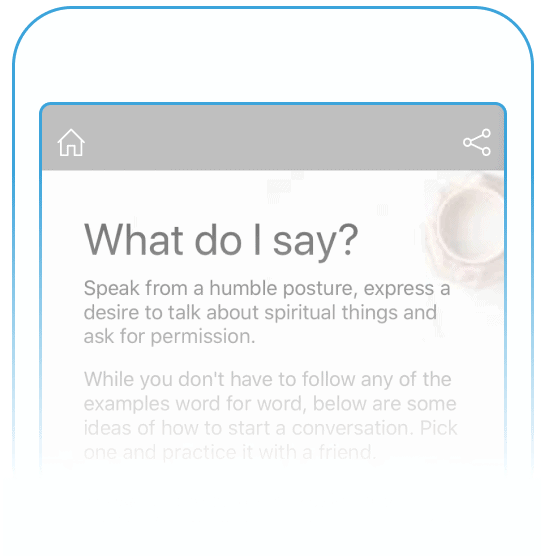
How does the person you care about describe God?

If you’re unsure how to answer this question, try being more curious. If you’re genuinely interested in someone else’s ideas and beliefs, he or she is more likely to be interested in yours.

You can create opportunities through your curiosity to describe the God you know.

You might say something like this:

“Hey, I’ve been thinking about the way I describe God to people. And it made me wonder what words you’d use to describe God. Are you comfortable telling me?”

The other person may not have thought about this before. But he or she is still likely to have some kind of immediate response to your question.

If the person talks about not being a Christian, or about believing in another religion, remember to affirm that. He or she has a way of thinking about God, and you’re genuinely curious about it.

It’s possible no one ever took the time to ask what he or she thinks about God or spiritual things. By asking, you’re demonstrating your desire to know the person on a deeper level.

A good spiritual conversation is two or more people genuinely interested in and trying to understand one another. A great conversation is when those people discover together what is true.

Pensé que usar una herramienta evangelística se sentiría raro

Transcript:

Hi, my name’s Ross. The conversation I remember is when I met a guy on a train years ago.

The day I met him he had actually been released from prison. He was on his way home after serving eight years in prison, and so I was asking him questions and just trying to be curious about him.

We talked about the fact that I was a Christian. I asked him what he thought about spiritual things and so he tried to explain that. As we talked I realized nobody had ever actually explained the gospel to him. He didn’t really know what the gospel message was.

I had a Knowing God Personally booklet in my pocket at the time because there was no GodTools app then. I thought to myself “I don’t know how long I’ve got left on the train with this guy. If I’m going to explain the gospel I need to make sure that I’m clear and concise so I’m able to get through everything that I want to before he gets off the train.”

So we looked at this booklet together. We read a page then talked about it. And by the end of the train journey, right before he got off at his station, we’d read the invitation to actually become a Christian at the end of that as well. So he’d understood the whole gospel and what he needed to do to respond to it.

I think what I learned from that was a couple of things:

One was that just because you’re using a tool to explain something doesn’t mean that you’re wedded to it. You can still have a really natural conversation. You just have a point to come back to every time you need to.

The other thing was that using a tool wasn’t as awkward as I imagined it was going to be.

All I had to do was say, “Hey, I’ve got this booklet. Do you think it would be useful if we looked at this as we’re talking?” He said that made perfect sense.

Sometimes the things I expect to be awkward when I’m having a conversation about my faith just aren’t. And so I had an amazing conversation with this guy that day.


¿Esperas que Dios te utilice?

When you started your day today, did you expect to talk with someone about spiritual things or even about the gospel by the end of the day?

What if expecting God to work through you each day is actually an important part of seeing it happen?

¿Esperas que Dios te utilice?

There’s a verse in the Bible that helps me focus my mind on what to expect from God.

“And Jesus said to them, ‘Follow me, and I will make you fishers of men’” (Matthew 4:19).

Jesus said that as I follow him, he will make me a fisher of men. Not, he might. He said this is going to happen. So when I do not see it happening in my life, I try to focus on following him more closely.

One way to do this is to ask God for opportunities to talk about the gospel or demonstrate his love with people who do not yet follow Jesus. You could even ask God for an opportunity today.

This past Saturday, I decided to pray expecting God to answer my prayer. As I drove away from my home I asked God to use me. Before I finished praying, I saw my new neighbor walking her dog and remembered it was her birthday.

God allowed me to look at my neighbor and see someone in need of his love. Before the day was up I found a way to show her love, which I believe will give me open doors to continue our conversations about the gospel.

So can you see ways Jesus is making you a fisher of men or women? Do you expect him to give you opportunities to share his love with someone today or tomorrow?

A short introduction to using GodTools

We created this demonstration video to help you think about how you can use GodTools in a conversation with someone you know. If you think of something else we could include or change to make the video more useful to you, email us at conversations@godtoolsapp.com.

3 cosas para empezar

God is working in the lives of people you know. He’s preparing them for conversations and moments that will be significant in their spiritual journeys. So naturally, it makes sense that he wants to prepare you too.

As a person using GodTools, we think you share our desire to have more conversations about Jesus. You want to offer your friends, family members, and neighbors the chance to discover him for themselves.

If you want to learn to talk with someone about God, here are three ideas for getting started:

Understand the other person

There is only one gospel, but the way people connect with the message of Jesus will vary depending on various factors. A person’s family background, experience of religion, and present circumstances will influence how they respond to what you’re saying.

That’s why it’s so important to focus on asking questions and listening well before you start explaining what you believe. Seek to understand before you ask to be understood.

nl_1
nl_2

Find tools that suit you

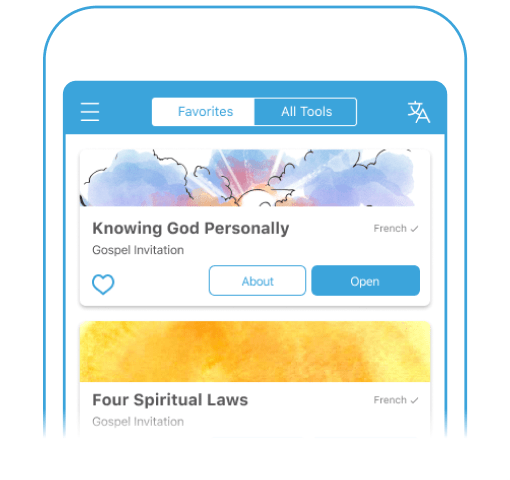
GodTools provides you with multiple ways to essentially share one message. The tools were designed to connect with people in different cultural contexts who might connect with different aspects of the gospel message.

Take some time to think about a person you want to have a spiritual conversation with. Look through the various tools. Then ask God to help you decide which of them you could use to guide your conversation. But remember, God is willing and able to help guide your conversation using any of these tools, or none of them.

Practice with someone you trust

The idea of practicing a conversation sounds unnatural. But if you want to be able to focus on the person you’re talking with rather than the content you are showing them, it can help to look through the screens with a Christian friend.

Knowing what it feels like to swipe through screens as you discuss the content will build your confidence for the conversation you hope to have in the future.

nl_3
Something you can try

Teach Me To Share is a tool designed by people with lots of experience of starting spiritual conversations and answering questions about faith. Use this tool to train yourself in helping others make their own decision to follow Christ.

We recommend you grab a coffee and take 10-15 minutes to look through this tool. Then you’ll feel more ready for the conversations you want to have.

Group 217-2

That’s it for this issue. If you have questions or feedback for us, or stories of your experiences using GodTools, please email ann@godtoolsapp.com

We are here to help you learn to talk about God with anyone.

es_MXES